Showing posts with label BigData. Show all posts

Thursday, October 22, 2015

Radian6 for Social Media Listening & Engagement - Top 10 Features

I have been using social media for brand promotion and engagement; there was this desperate need to evaluate data flowing in various channels. That’s when I discovered Radian 6 – it’s a very expensive tool but worth exploring.  
Radian6 has created a social media monitoring and engagement platform that allows you to view relevant conversations happening around your brand and products in real time. It’s a great social media listening tool that allows brands to enhance their products & services. I have been playing around with it for quite some time and here’s a breakdown of the top 10 most important features of Radian6.

Before you get started, create “Topic profile” by providing your product/ brand name, keywords and Social media channel list.

1. Conversation Cloud: It’s a widget that displays the top 50 words and call out the more distinct words mentioned across all the social media about your product/brand. So, if a negative word appears in the Conversation Cloud, it may be worth further investigating those mentions to see what’s being said about their brand.


2. River of News: River of news widget enables you to see mentions about your brand, products or competitors, and where the conversation is taking place. Further, the River of News allows brands to organize these conversations by Forum Thread Size, Twitter Followers, Publish Date, Media View Count, and more.
3. Topic Trends: By opening the River of News or Conversation Cloud widgets within Topic Trends, can further drill down into specific points throughout the timeline to see why the conversation had a spike during a specific time period. It pulls in conversations from Twitter, Facebook, Blogs, Flickr, YouTube, Mainstream News, and Buy/Sell websites
4. Reporting: With this feature all the Radian6 widget data can be seamlessly integrated into excel worksheets. You can set up alert emailed reports on daily/weekly bases that need to be sent out to the higher management.
5. Summary Dashboard:  With the summary dashboard users can monitor about their brand, products, competitors and regarding industry very conveniently. It provides Social media metrics, Twitter analysis, brand analysis, competitive intelligence, workflow, engagement, key influencers, and demographics. It’s like a report card which gives the overall well being of brands from development to failures.

6. CS Engagement: It allows brands to interact with their customers as well as monitor conversations. Via engagement console can integrate various social media platforms such as multiple twitter handles, Facebook account and all the pages associated with the brand are integrated as well and chatter streams. Workflow functions with team mates are even possible on the go! If you have a VOC (Voice of the customer) team the desktop version will help teams to work on the go!

7. Competitive Analysis: Radian6 offers users comprehensive coverage of listening, monitoring and discussing on the social web about the Interaction of their customers with brand products as well as competitors. Given the same industry,  it’s easy to track which competitor was trending, and for what reasons. Based on the no of total post & sentimental analysis you can get a feel of how the market interacts with your competitor. You can build your strategy to play around with their weekends.  

8. Tracking Leads Generated: Radian6 is now part of the Salesforce Marketing Cloud, so its integration with Salesforce.com is improving with each release. You can drive revenue by understanding what content drives traffic, finding the conversations that will convert into prospective sales. Discover purchase signals and point-of-need conversations or even intercept discussions with competitors. Plus, you can take advantage of the integration capabilities, linking you to Salesforce CRM, Service Cloud, web analytics, and more.

8. Sentiment Analysis: Radian6 is one of those matured tool which has the capability of automated sentiment reviews on-topic posts as they come in, determines the sentiment of the post at the sentence level, and aggregates a positive, negative, or neutral designation at the post level based on specifies sentiment keywords and phrases. To BigData is aggressively used to identify is our customers are happy about our products & services. Radian6 sits as an overlay to this technology and can give you real-time data of how your customers are feeling at a given time for brands to course correct and not lose revenue and goodness of the customers.


10.  Media Monitoring: Brand is facing the pressure of being present in all the social channels right from Facebook,Twitter, Instagram, Blog, YouTube to Forum. In this case radian6 will help you identify which are the most effective channels and can guide towards how much resource and budget brand need to invest in a given social channel to assure maximum ROI.

Let me know which is your favourite feature and why :) 


Tuesday, May 26, 2015

Why as a Marketer I ask for Data?

How to approach your target audience?
Where would you find your TG?
When can you connect with your TG?
How much budget I allocate for a Digital campaign?
What is the idea cost per user acquisition?
Best bid for CTC/CTR/CPM?

….and many more questions haunt a marketers mind.

In a traditional & conventional marketing scenarios, all these questions where answered with a vague amount of guess, prediction, case studies, intuition, assumption, try & error mechanism.

Well, in todays time with so much investment in big data analytics, marketers are on the right track when they decide to use a targeted and intentional approach to analysing their data. Big Data has become a marketing buzzword. All that marketers need to do is ask the right set of questions to get measurable results.

As a marketer we have access to social media analytics data, sales date, internet searches, cookies, CRM, thus we should ask some interesting questions to Big Data:

Which is the untapped market segment?
Nike saw big data as a portal into an entirely new market. As strong as Nike’s position has been, the “just do it” inspiration of its brand and the quality of its products was likely not enough to strengthen and grow its highly valuable and profitable customer relationships in the future. The data and information streaming from performance tracking and health monitoring wearables was potentially more valuable, providing a closer, more sustainable and constant connection to customers (not to mention loads of high-value data). Big data – a great complement to Nike’s current product portfolio and market positioning was both the ends and means of Nike’s innovation into a new market

When are consumers leaving us?
When T-Mobile set out to decrease its churn rates, it looked to big data to tell the story of customers who jumped ship and went to another company. The company noticed that customers who left shared similar behaviours across billing cycles, web logs, and social media channels.
Having identified several markers as risk factors, the company was able to effectively intervene when some of these markers popped up, decreasing churn rate within a quarter.

How effective is our social media?
Whirlpool, the largest manufacturer of home appliances, wanted to discover what their customers and consumers were saying about their products and services on social media platforms.They used Big Data to monitor and analysis conversations across popular channels such as Facebook, Twitter, and Youtube, review and blogger sites, and mainstream news. Analytics findings were incorporated into Whirlpool’s decision models to accurately predict customer churn, loyalty, and satisfaction. This process enabled the company to listen, respond, and measure on a scale unobtainable by manual methods. The results revealed that Whirlpool improved its understanding of its overall business. There was increased satisfaction, faster responsiveness, and overall, more satisfied experiences with customers. 

Do our customers want us?
Finding the commonality in what your customers like can be eye-opening and can prevent you from making big investments in products or services that no one is interested in. Netflix proved this point when it optioned the wildly successful series "House of Cards."
Execs weren't originally sure whether to move on the series or not. Sure, it was good, but would Netflix audiences like it? Luckily, Netflix had more than enough data at its disposal to help make a pretty educated guess. Do viewers like Kevin Spacey? Yes. Do they watch gripping, cynical political dramas? Yes. Do viewers watch material like this all the way through? Yes! Then, does it follow that they will like this series? Yes! And so it is that "House of Cards" fans have big data to thank for hours of enjoyable TV watching.


How effective is you're marketing?
Nissan have a whole host of localised websites designed to help consumers determine which Nissan is ideal for them. They wanted to go further than just simply measuring conversions, but instead delve into the car types, models and colours that customers had been looking at online.

They did this through a ‘request form’ that a potential customer has to fill out following their completion of a brochure or test drive request. By aggregating these data points from individual customers, Nissan were able to paint a vivid picture as to the vehicles which were in demand throughout a particular region – this means that advertising campaigns and production can be tailored to suit the needs of a region instead of just a country as a whole.

What will WOW a customer & gain a competitive edge?
It’s hard to talk about analytics success stories and not mention Amazon. They were one of the early adopters and are the only company that have a patent that allows them to ship goods before an order has even been placed. Their ‘customers who bought this…’ feature was revolutionary at the time, but compared to the company’s current offerings, it pales into insignificance. Now, the data points are wide-ranging and far more indicative of what a customer is likely to be genuinely interested in.

Today’s recommendations are based on. their wish list, the items they have reviewed and what similar people have purchased – this creates a very rounded profile of a customer and is a great example of predictive analytics being used to its full potential.

So to get the most from your Big Data investment, focus on the questions you's love to answer for your business. But remember, while there may be good and mediocre questions, the worst mistake you can make is being too afraid to ask your data any questions at all. The process may be challenging, but it can create an incredibly targeted and effective strategy.

Data-driven decisions are better than intuition-based ones. Happy Questioning!


Wednesday, November 12, 2014

Internet of Things - Innovations & Business Models

How many times have you’ll fought with your loved ones for – Leaving the water tap open, forgotten to switch off the lights, not buying the groceries on time,  leaving the plants un-watered etc. Well, to solve such many more problems & to make our lives easier here comes “Internet of Things”.

I happened to attend ThoughtWorks Converge Conference last Saturday, in this post I will share some of my learning on “Internet of Things”(IoT).

-          IoT term was first used in the year 1999

-          7 things a device must have to be IoT (Connectivity, Sensors, Processor, Security, Quality, Cost efficiency, Energy Efficiency)

Some of the disruptive Innovations in the space of Internet of Things:

Builders constructing Smart houses:

A house where your room temperature is auto set depending on the current climate temperature, will timely water your plants, lightings change as per your moods. All this is done without human interference with the help of IoT.

Connected Refrigerator:

Imagine your fridge scanning through your grocery items inside & preparing the grocery order list & sending a purchase order to Big Basket & when you come home all the materials are waiting at your doorsteps. Fridge sending out emails suggesting you based on the items present the Dinner menu to be cooked.

Google Car:

 Well google car needn’t be explained. That’s what I need as I am hopeless in driving. So practically eliminating driver’s cost you have a car which will follow google’s map & take you to your destination without any effort.

Healthcare enabled Smart watches:

 Today your Smartphone’s will warn you before your chances of heart attack, when your glucose level is going high & how much your BP is in control. Makes you feel your doctor is in your hand.


IoT Business Models:

Internet Business Models are revolving around Likes, Shares, Eyeballs, Views etc. With IoT there is an evolution of new business model:

-  Build a solution which will solve problems of people & they would be ready to pay for that solution

-    Solve the customer real time problem “now”

-    You may not have consumers directly paying for the solution, but have to identify a third party who would be ready to pay for it

-   Design BM around partnership & alliance for a bigger WIN


Some successful IoT Business Models:

  http://www.patientslikeme.com/

A community where-in people discuss about their health issues & all this discussed business intelligence is shared across clinics & hospitals so that can generate leads.

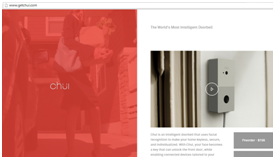
"The world's most intelligent doorbell." Chui's facial recognition technology replaces keys, passwords or codes, allowing you to disarm a security system with facial recognition

Top10 Internet of Things Startup 


Way to approach a problem via IoT:

1.       Identify the problem

2.       Come out with 10 diff IoT solutions

3.       Design feasibility study for each of the solutions & finalize one which is more doable

4.        Develop Business Model

5.       If you know your idea is profitable & scalable go ahead with it


Few Tips for business in IoT:

-          Never startup because you have a great idea, startup because you have a problem to solve

-          Find the most easiest technical solution

-          Don’t design solution just for one market – plan it as a global solution


Today Refrigerators can send Malicious Emails, so my question to you is - Are You Yet there ?